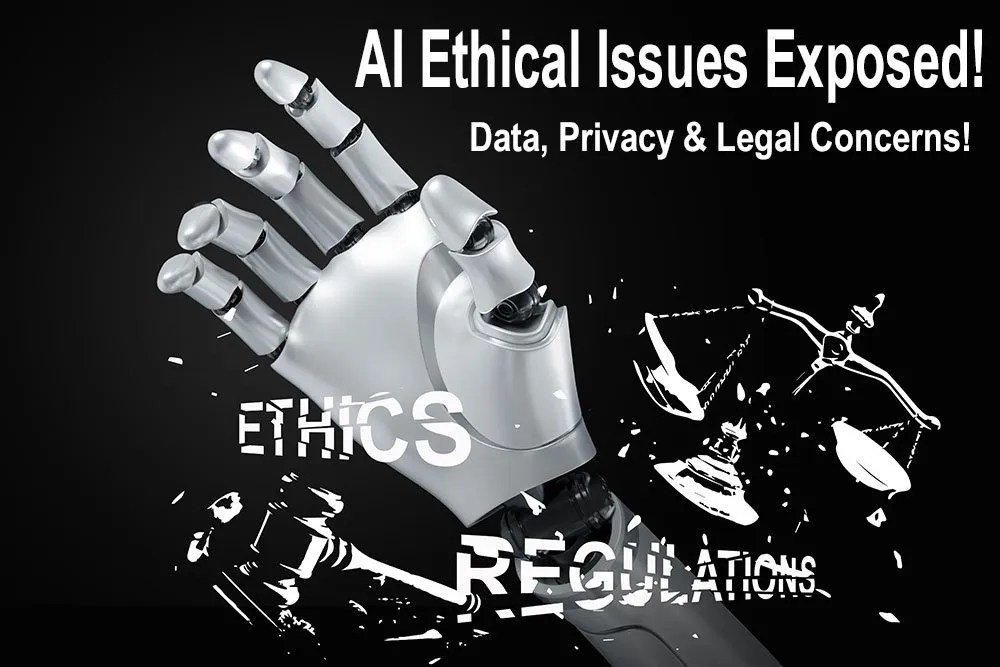
The hum of an algorithm writing a sonnet. A digital muse crafting haikus. AI poetry isn't just a futuristic fantasy; it's here, and it’s evolving rapidly. But as machines learn to mimic the nuanced dance of human language and emotion, we’re faced with profound questions: Who owns these digital verses? And more critically, how do we ensure that in their pursuit of eloquent expression, AI systems don’t inadvertently erase the very cultural soul that gives poetry its meaning?
These aren't just academic musings. The rise of AI-generated content, especially in deeply personal and culturally rich domains like poetry, brings with it a complex web of ethical and copyright challenges that demand our immediate attention. Failing to address them could mean a future where creativity is commoditized without proper attribution, and cultural identities are flattened into generic, universally palatable forms.
At a Glance: Navigating the AI Poetry Landscape
- Copyright Confusion: Determining ownership when AI is the "creator" and human input varies widely.
- Training Data Dilemma: The ethical and legal implications of using vast amounts of copyrighted material to train AI models.
- Cultural Erosion Risk: How AI's tendency to generalize can strip poetry of its specific cultural nuances, especially for minority languages and traditions.
- The Ambiguity Imperative: Why preserving multiple interpretations and subtle meanings is crucial for cultural authenticity in AI-generated poetry.
- Ethical Frameworks: The need for guidelines and tools, like "Ambiguity Preservation," to ensure AI poetry respects and reflects human diversity.
- Human Oversight: The irreplaceable role of cultural experts, poets, and linguists in validating and guiding AI poetry development.
Beyond the Code: Why AI Poetry Demands Human Consideration
Poetry, at its core, is a deeply human endeavor. It’s a tapestry woven with experience, emotion, cultural heritage, and individual perspective. When AI enters this sacred space, it doesn't just automate a task; it intervenes in the very definition of creativity and authorship. This intervention forces us to confront two major pillars of our creative world: copyright law and ethical responsibility, particularly concerning cultural representation.
Ignoring these issues isn't an option. Without clear ethical boundaries and legal frameworks, AI poetry risks becoming a Wild West of content generation—a place where cultural specificities are lost in translation, and the rightful creators of foundational works receive no acknowledgment or compensation.
The Looming Shadow of Copyright: Who Owns AI's Muse?
Perhaps the most immediate and tangible challenge facing AI poetry is the question of copyright. Traditional copyright law is built on the premise of a human author creating an original work. What happens when the "author" is an algorithm?
The Training Data Quandary
At the heart of every AI poetry generator is a vast dataset—millions of poems, stories, articles, and conversational snippets that the AI has "read" and learned from. Many of these texts are copyrighted. This raises a fundamental question: Is "reading" a copyrighted work for the purpose of learning (training an AI) considered fair use, or is it a form of infringement?
Consider an AI model trained on a significant corpus of contemporary poets without their express permission. While the AI doesn't directly copy their lines, it learns their style, their rhythm, their vocabulary. If it then generates a poem that strongly resembles the work of one of those poets, is that a derivative work? Is it merely inspiration? The lines are incredibly blurry. Legal precedents are still catching up, but many argue that using copyrighted material for large-scale commercial AI training, especially without compensation, undermines creators' rights and incentives.
The Authorship Anomaly: Who's the Creator?
If an AI generates a poem, who is the author?
- The programmer? They wrote the code, but the AI's output is often emergent and unpredictable.
- The user? They provided the prompt, but the creative heavy lifting was done by the machine.
- The AI itself? Current legal systems typically don't recognize AI as a legal person capable of owning copyright.
This conundrum often leads to practical, albeit imperfect, solutions. Some argue for copyright vesting in the human who exercised sufficient creative control over the AI's output, perhaps through extensive prompting, curation, or editing. Others propose a "no human author, no copyright" stance for purely AI-generated works, placing them directly into the public domain. The resolution of this debate will profoundly impact how we value and compensate creative work in the digital age.
Infringement Implications: When AI Crosses the Line
Beyond authorship, there's the risk of direct or indirect infringement. An AI, having processed countless texts, might inadvertently reproduce a copyrighted phrase, a distinctive poetic structure, or even entire lines. Proving intent is difficult, but infringement doesn't always require it.
The challenge is detecting such instances at scale. As AI poetry becomes more sophisticated, its output can be indistinguishable from human work, making it harder to identify plagiarism or copyright violations. This necessitates robust detection mechanisms and, perhaps more importantly, a commitment from developers to mitigate these risks.
Fair Use & Transformative Works in the AI Age
The concept of "fair use" in copyright law—allowing limited use of copyrighted material without permission for purposes like criticism, comment, news reporting, teaching, scholarship, or research—is frequently invoked in AI discussions. Proponents argue that AI "learning" from copyrighted texts is akin to a human reading and being inspired, and thus falls under fair use, especially if the output is transformative (i.e., significantly different from the original).
However, critics argue that the sheer scale and commercial intent of many AI operations differentiate them significantly from traditional fair use scenarios. The transformative nature of AI-generated poetry is also debatable. Is a poem written in the style of a famous poet truly transformative, or is it just an advanced form of pastiche? The courts will undoubtedly be wrestling with these distinctions for years to come, shaping the future of AI's relationship with creativity and intellectual property.
The Deeper Ethical Rift: Cultural Authenticity and Representation
Beyond the legalities of copyright, AI poetry plunges us into profound ethical considerations, especially when it touches upon cultural heritage. Poetry is often a vessel for a community's history, its values, its unique way of seeing the world. When AI generates poetry, it processes these deeply embedded cultural layers. The concern? That it might flatten them, misrepresent them, or even erase them.
The Homogenization Trap: Why Nuance Matters
Current AI poetry systems, for all their impressive capabilities, often prioritize coherence and statistical patterns over cultural nuance. This leads to a significant risk: the homogenization of cultural specificity. Imagine an AI trained predominantly on Western literary traditions attempting to generate poetry in the style of an indigenous language or a regional dialect. The AI might produce grammatically correct verses, but they could lack the specific metaphors, historical allusions, emotional cadences, and philosophical underpinnings that make the original culturally authentic.
This risk is particularly acute for marginalized languages and cultures. Their poetic traditions, often rich in ambiguity and subtle layers of meaning, are precisely the elements that are difficult for AI to grasp and replicate without a very deliberate, ethically-driven design. The danger isn't malicious intent, but rather an algorithmic tendency to collapse diverse interpretations into a single, easily digestible output, inadvertently stripping away the very essence of cultural identity.
This is where the concept of Ambiguity Preservation becomes not just a technical enhancement, but an ethical imperative.
Unpacking the "Ambiguity Preservation" Framework
The "Ambiguity Preservation in AI Poetry" framework offers a powerful counter-narrative to the homogenization trap. It argues that poetic ambiguity—the capacity for multiple plausible interpretations—is not a flaw to be optimized away, but a foundational element of cultural authenticity. By embracing and maintaining this ambiguity, AI systems can become tools for honoring cultural diversity rather than eroding it.
Let's break down its core tenets:
Multiple Interpretations, Broader Understanding
Instead of generating a single "best" poem, AI systems should be able to generate several plausible interpretations simultaneously. This mirrors how humans engage with complex poetry, allowing for diverse readings based on individual and cultural perspectives. Imagine an AI generating a poem with three different possible meanings, each subtly reflecting a different cultural lens. This enriches the experience rather than narrowing it.
Respecting Cultural Borders
Ethical AI must recognize and preserve cultural boundaries. This means maintaining regional, ethnic, and linguistic specificity, rather than blurring them into a generic global style. For example, an AI generating poetry inspired by a specific dialect should aim to preserve the unique syntactic and semantic quirks of that dialect, rather than translating them into a "standard" language.
The Power of the Unsaid: Emotional Depth
Poetry's emotional power often lies in what remains unsaid, in the spaces between words, in the subtle allusions. The framework emphasizes Emotional Positional Encoding, which prioritizes emotional salience while maintaining contextual ambiguity. This helps the AI understand that expressing an emotion isn't always about explicit declaration, but often about evocative suggestion.
Digital Sfumato: Blurring the Edges, Not the Meaning
Inspired by Renaissance painting techniques, Digital Sfumato in AI poetry involves using gradual transitions between emotional states or interpretations. This avoids abrupt shifts or definitive conclusions, allowing the AI to generate poetry that flows with nuanced ambiguity, much like the gentle haziness that lends depth to a Mona Lisa smile.
Knowing When Not to Know: Measured Uncertainty
Not all ambiguities need immediate resolution. The framework suggests maintaining multiple plausible interpretations until there's sufficient user engagement or cultural expertise to warrant a deeper dive. This allows the AI to present possibilities, inviting human collaborators to explore and contextualize, rather than forcing a single, potentially incorrect, interpretation.
Spotlighting the Specific: Contextual Illumination
While preserving peripheral ambiguity, AI should foreground culturally specific information. This ensures that the unique elements of a culture—its history, myths, traditions, and distinct linguistic features—are highlighted and understood, not lost in a sea of generalities. It's about illuminating the unique, even as you embrace the subtle.
Putting Principles into Practice: Building Ethical AI Poetry Systems
The "Ambiguity Preservation" framework isn't just theoretical; it outlines practical implementation strategies that can guide developers, linguists, and cultural preservationists alike.
Collaborative Validation: Community at the Core
One of the most crucial strategies is the integration of Community-Validation Layers. This involves developing protocols where cultural experts from the specific traditions an AI is engaging with can review and validate the AI-generated poetry. This ensures that the output resonates authentically with the source culture, providing a vital human feedback loop that no algorithm can replicate. It moves beyond technical accuracy to cultural appropriateness.
Designing for Nuance: Ambiguity Preservation Fields
Developers are encouraged to create Ambiguity Preservation Fields—digital environments where multiple interpretations of AI-generated poetry can coexist. Imagine an interface where clicking on a line of an AI poem reveals several culturally-informed readings, or where different regional dialect interpretations are presented side-by-side. This allows users to actively explore cultural nuances rather than being presented with a single, potentially reductive, version.
Checking the Heartbeat: Ethical Resonance Testing
Before deployment, AI poetry systems should undergo Ethical Resonance Testing. This assesses whether the generated poetry maintains an ethical resonance with the source cultures. Does it inadvertently perpetuate stereotypes? Does it misrepresent historical events? Does it respect sacred traditions? This proactive testing is essential for preventing harm and ensuring the AI acts as a responsible custodian of cultural expression.
Guardrails for Generative Art: Cultural Boundary Integrity
Implementing Cultural Boundary Integrity Protocols means designing AI systems to maintain syntactic, semantic, and pragmatic ambiguity preservation across all decision-making layers. This ensures that the AI doesn't just generate ambiguous output by chance, but actively works to preserve ambiguity as an inherent part of the cultural expression, from its initial data processing to its final output generation.
Case in Point: Honoring Ukrainian Poetic Heritage
The ground truth research highlights Ukrainian poetry as a compelling case study. Ukrainian poetry is incredibly rich, featuring unique metaphor systems, deep historical references, and distinctive emotional cadences. These elements resist easy reduction to universal patterns.
An envisioned AI poetry assistant built on the Ambiguity Preservation framework would:
- Generate multiple interpretations of historical Ukrainian poems, reflecting various scholarly or regional perspectives.
- Preserve subtle regional dialect differences, acknowledging their unique beauty and cultural significance.
- Maintain ambiguous references to cultural trauma, understanding that direct, explicit expression isn't always culturally appropriate or desired, and that nuance is key to respectful engagement.
- Allow users to explore different readings of the poetry based on specific cultural contexts, empowering a deeper and more informed understanding.
Such an assistant wouldn't just write Ukrainian-like poetry; it would actively strive to honor and illuminate the specific beauty and complexity of Ukrainian poetic heritage.
Navigating the Creative Commons: Best Practices for AI Poets & Developers
Whether you're a developer building the next generation of poetry AI or a poet experimenting with these new tools, certain best practices can help navigate the ethical and copyright minefield.
Transparency is Key
Always be transparent about the role of AI in your poetry. If a poem was generated by AI, state it clearly. If human input was significant, explain the extent. This honesty helps manage expectations, fosters trust, and contributes to the ongoing conversation about AI authorship.
Diverse & Ethically Sourced Training Data
One of the most impactful steps is to prioritize diverse, ethically sourced, and permissioned training data. This means:
- Actively seeking out a wide range of voices and traditions, especially those historically underrepresented.
- Obtaining explicit permission from creators or rights holders when using copyrighted material, or using content explicitly licensed for AI training (e.g., Creative Commons licenses that permit commercial use or derivative works).
- Auditing datasets for biases that could lead to culturally insensitive or homogenizing outputs.
Consent & Credit
If your AI uses specific authors' works for training (even if argued as fair use), consider providing credit or even exploring micro-licensing models where creators are compensated. This moves beyond legal obligation to ethical reciprocity. If you're adapting or drawing heavily from a specific style, acknowledge your influences, human or algorithmic.
Human Oversight & Curation
AI is a tool, not an autonomous creator. Human oversight remains crucial.
- Curate and refine AI outputs: Don't just publish raw AI poetry. Review it, edit it, and ensure it aligns with ethical standards and artistic intent.
- Incorporate cultural experts: As the Ambiguity Preservation framework suggests, involve linguists, poets, and cultural preservationists in the development and validation process. Their insights are invaluable.
Embrace Iteration and Feedback
The field of AI poetry is still nascent. Be prepared to iterate, learn from mistakes, and adapt your approaches based on community feedback. Engage in discussions, listen to concerns from poets and cultural groups, and use that input to improve your systems.
What Does the Future Hold for AI Poetry?
The path forward for ethical and copyright-compliant AI poetry is undoubtedly complex, but it's also brimming with potential. Imagine AI not as a replacement for human creativity, but as a powerful collaborator, an assistant that can explore vast linguistic landscapes, unearth hidden connections, and even help preserve endangered poetic traditions. You can begin to Explore our poetry generator to see how these tools are evolving.
The "Ambiguity Preservation" framework calls for a collaborative effort, a shared commitment from developers, linguists, poets, and cultural preservationists. By working together, we can:
- Develop technical mechanisms that actively preserve cultural nuance and ambiguity within AI models.
- Establish robust validation protocols to ensure AI poetry resonates authentically with the cultures it seeks to engage.
- Shape legal frameworks that fairly compensate creators while fostering innovation in AI.
- Cultivate a creative ecosystem where AI augments human expression, respects cultural diversity, and expands our understanding of what poetry can be.
The ultimate goal isn't just to make AI write better poetry, but to make it write poetry that is more human, more respectful, and more enriching for everyone. This is a journey that requires not just algorithmic brilliance, but also profound empathy and a deep commitment to preserving the rich tapestry of human culture. The conversation has just begun, and your voice, whether as a creator, a consumer, or a cultural guardian, is essential in shaping its future.