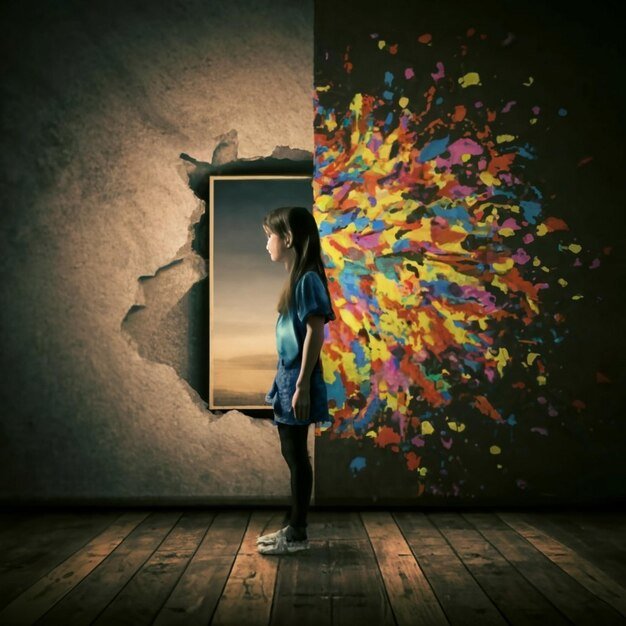
For centuries, poetry has been a sanctuary of human emotion, intellect, and unique expression. It’s a realm where words intertwine to paint vivid landscapes of thought and feeling, crafted by the human hand and heart. But what happens when the silent gears of artificial intelligence enter this deeply human space? Far from diminishing the art, Exploring Poetic Forms with AI Generators is proving to be a revolutionary partnership, expanding creative boundaries in ways poets are only just beginning to uncover. This isn't about machines replacing muses; it's about a groundbreaking collaboration that redefines the very process of poetic creation.
At a Glance: Your Guide to AI-Powered Poetry
- AI augments, it doesn't replace: AI is a tool, an assistant, not a substitute for human creativity.
- Masters poetic forms: AI learns patterns to generate sonnets, villanelles, and more, but lacks human emotion.
- Overcome creative blocks: Use AI for inspiration, fresh perspectives, and brainstorming 24/7.
- Blend human and machine: The best results come from combining AI's output with your unique voice and emotion.
- Tools vary: From general-purpose AI writers to specialized poetry generators, choose wisely.
- Ethical considerations matter: Understand copyright and originality in this new creative landscape.
The AI-Poetry Revolution: Your New Creative Ally
The contemporary era has seen artificial intelligence seamlessly integrate into nearly every facet of our lives, and the creative arts are no exception. Poetry, long considered the pinnacle of human expression, is now finding a fascinating partner in AI. This fusion isn't a threat to the poet's craft; it's an exciting opportunity. AI offers new tools that stimulate creativity, help conquer the dreaded writer's block, and open up novel avenues for collaborative projects. Think of it as an augmentation of human ingenuity, not a replacement.
At its core, AI-generated poetry relies on highly sophisticated language models and neural networks. These systems are essentially digital sponges, trained on colossal amounts of text – from classical literature to contemporary works. Through this intense training, they learn the statistical relationships between words, phrases, and even the subtle stylistic elements that define a poet's unique voice. The result? They can dissect, emulate, and then produce original pieces that echo diverse styles and moods. While AI can master the structural intricacies of poetic forms like sonnets, villanelles, and sestinas by identifying patterns and predicting contextual word sequences, it's crucial to remember a fundamental truth: AI doesn't genuinely understand or feel human emotions. Its "understanding" is purely statistical, a masterful mimicry rather than an experiential connection.
Decoding Poetic Forms: How AI Learns the Rules of Verse
One of the most remarkable aspects of Exploring Poetic Forms with AI Generators is witnessing how these algorithms grapple with, and ultimately master, the intricate rules that govern classical poetry. Imagine a sonnet: 14 lines, typically in iambic pentameter, with a specific rhyme scheme (e.g., ABAB CDCD EFEF GG for Shakespearean or ABBAABBA CDECDE for Petrarchan). For a human poet, mastering this form requires years of practice, an innate sense of rhythm, and a deep understanding of language. For an AI, it’s a colossal pattern recognition puzzle.
AI systems analyze thousands of sonnets, identifying recurring motifs, syllable counts, stress patterns, and, most importantly, the exact rhyme schemes. They learn not just what words rhyme, but where those rhymes typically fall within a stanza and how they contribute to the poem's overall structure and flow. The same applies to more complex forms like the villanelle (19 lines, five tercets, one quatrain, two refrains, and two repeating rhymes) or the sestina (six stanzas of six lines each, followed by a three-line envoi, with the same six words repeated at the end of each line but in a shifting pattern). The AI doesn't "feel" the constraint of the form; it simply processes and replicates the mathematical elegance of its structure. By learning these patterns and predicting contextual word sequences, AI can construct entirely new poems that adhere rigorously to these established rules, offering a fascinating new lens on traditional verse.
Your New Muse: AI as a Collaborative Partner
Think of AI not as a competitor, but as your ever-present, tireless assistant. It's a poet's assistant that never sleeps, never runs out of ideas, and isn't afraid to suggest something wild. When you're Exploring Poetic Forms with AI Generators, it quickly becomes evident that AI truly excels as a brainstorming partner. It can offer a deluge of suggestions – alternative word choices, fresh metaphors, and even provide feedback on rhythm and structure.
Perhaps you’re staring at a blank page, the dreaded writer’s block looming large. AI can provide those crucial starting points, generating initial lines or even entire stanzas that you can then sculpt, refine, and infuse with your unique voice. It's excellent for generating fresh perspectives on familiar themes, pushing you beyond your conventional thought patterns. Furthermore, it enables effortless experimentation with diverse styles. Want to try writing a haiku in the style of Emily Dickinson, or a free verse piece inspired by the rhythm of a jazz improvisation? AI can attempt to mimic these styles, giving you a foundation to build upon. In essence, AI acts as a 24/7 creative sparring partner, ready to help you push past limitations and unlock new poetic territories. To better understand strategies for overcoming creative blocks, AI offers a digital pathway to new ideas.
Integrating AI into Your Poetic Workflow: A Four-Step Playbook
Bringing AI into your creative process doesn't require a computer science degree; it's a straightforward integration that can significantly enhance your work. Here’s a practical playbook for making AI a productive part of your poetry journey:
- Define Your Goal: Before you even open an AI tool, clarify what you want to achieve. Are you seeking initial inspiration for a new theme? Do you want to explore how a specific poetic form (like a sonnet) can convey a modern message? Are you stuck on finding the right rhyme for a particular line, or do you need a complete rough draft to kickstart your editing process? Being specific about your objective will guide your prompts and lead to more useful AI output.
- Select the Right Tools: Not all AI tools are created equal, especially when it comes to creative writing. Some are better for rapid brainstorming, while others offer more nuanced control over style and form. Familiarize yourself with the options available, which we'll detail shortly. Your choice of tool should align with your defined goal.
- Experiment and Iterate: This is where the magic happens. Don't expect perfection on the first try. Input different prompts, adjust parameters (if the tool allows), and test various AI models. Treat the AI’s initial output as a rough draft, a collection of raw material. Read, analyze, and then provide feedback back to the AI – "Make it more melancholic," "Add more nature imagery," or "Try a different rhyme scheme." The iterative process of prompt, generate, refine, and re-prompt is key to unlocking AI's full potential.
- Blend Human and Machine: This is the most crucial step. AI provides the clay, but you are the sculptor. Take the AI-generated content and infuse it with your unique voice, your personal emotions, and your lived experiences. Edit ruthlessly, replacing clichés, adjusting rhythm, and adding the nuanced layers of meaning that only a human poet can truly impart. The final poem should be undeniably yours, enriched by the assistance of your AI partner.
The Tools of the Trade: Your AI Poetry Kit
The market for AI writing tools is expanding rapidly, offering poets a diverse range of options. When you’re Exploring Poetic Forms with AI Generators, choosing the right platform can significantly impact your results.
General-Purpose AI Writers: Versatility at Your Fingertips
These AI platforms are designed for a broad spectrum of writing tasks but often include robust capabilities for poetry.
- Sudowrite: This tool is a favorite among fiction writers but boasts a powerful 'Poem' capability that’s excellent for poets. It’s designed for collaborative suggestions, meaning it won't just spit out a full poem, but will offer alternative phrases, lines, or imagery to enhance your work. Its strength lies in its ability to understand context and offer creatively relevant expansions.
- Jasper (formerly Jarvis): Known for its speed and ability to generate high volumes of content, Jasper offers a dedicated 'Poems' template. If you're looking to brainstorm quickly, generate multiple variations of a stanza, or explore many different stylistic approaches in a short amount of time, Jasper can be incredibly effective. Its strength is in providing a rapid stream of ideas.
- ChatGPT / GPT-4: As the most widely recognized AI language model, ChatGPT (and its more advanced sibling, GPT-4) is incredibly versatile. Its output quality is directly proportional to the detail and specificity of your prompts. You can instruct it to write a sonnet about a specific topic, in the style of a particular poet, with a defined tone and theme. This level of granular control makes it a powerful tool for those willing to invest time in crafting detailed instructions. To fully leverage its potential, understanding how AI language models function is highly beneficial.
Specialized Poetry Generators: Focused on Verse
While fewer in number, some tools are built specifically with poetry in mind.
- Verse by Verse (from Google): This experimental tool from Google is designed to help you write poetry in the style of famous American poets. It offers line suggestions based on your input, allowing you to collaboratively craft a poem with the "ghosts" of poetic giants. It's less about generating full poems and more about inspiring individual lines and phrases in a particular style, making it a unique collaborative experience.
No matter which tool you choose, the key is to experiment. Many platforms offer free trials, allowing you to test their capabilities before committing. We encourage you to Explore our poetry generator to see how these concepts come to life.
Actionable Strategies for Crafting Better AI-Assisted Poetry
Simply plugging a vague request into an AI generator won't yield stellar results. To truly excel when Exploring Poetic Forms with AI Generators, you need to approach the interaction strategically.
- Be Hyper-Specific: Vague prompts lead to generic output. Instead of "Write a poem about nature," try: "Write a 14-line Shakespearean sonnet about the fleeting beauty of an autumn leaf, incorporating themes of loss and the relentless passage of time. Use a melancholic tone and imagery of crimson and gold." The more detail you provide about form, theme, tone, imagery, and even specific words or phrases to include, the better the AI can tailor its response to your vision.
- Iterate, Iterate, Iterate: Consider the first AI output as a rough draft, a starting point. It's rarely perfect. Read it, identify what works and what doesn't, and then feed that feedback back into the AI. "That's good, but make the second stanza more vivid with sensory details." or "Can you rewrite line 7 to have a stronger, more active verb?" This conversational refinement process is where the true power of AI collaboration lies.
- Edit Ruthlessly: The AI is a master mimic, but it lacks genuine human experience. Its output can sometimes feel formulaic, contain clichés, or miss the subtle emotional nuances that make poetry truly profound. Your role as the human poet is to curate, edit, and elevate the AI's suggestions. Remove anything that feels generic, infuse your unique voice, add personal anecdotes or sensory details, and sculpt the rhythm and meter until the poem resonates with authentic emotion. Make the work uniquely yours.
- Guard Against Homogenization: Because AIs are trained on vast datasets, there's a risk that their output, if unedited, could lead to a homogenization of style. Consciously strive to inject your distinct personality and perspective, ensuring your poems don't sound like everyone else's AI-assisted creations.
The AI Advantage: Why Embrace This New Frontier?
The benefits of Exploring Poetic Forms with AI Generators are compelling, offering tangible advantages to poets at every stage of their journey:
- Sparks Creativity and Generates New Ideas: AI is an endless wellspring of inspiration. When your own creative well feels dry, AI can instantly provide new metaphors, fresh angles on a theme, or entirely novel concepts to explore.
- Helps Overcome Writer's Block: The blank page can be intimidating. AI can offer a springboard, a first line, a stanza, or even a full outline to break through creative inertia and get your ideas flowing again.
- Enables Exploration of Different Styles and Forms: Ever wanted to try a terza rima or a pantoum but felt daunted by the structure? AI can help you experiment with complex forms, allowing you to understand their mechanics by seeing them in action, freeing you to focus on the content.
- Enhances Collaboration Between Humans and Machines: This partnership leverages the strengths of both entities: AI's vast linguistic database and pattern recognition, combined with human emotional depth, experience, and intuitive understanding of meaning. This synergistic relationship leads to new levels of innovation.
- Provides Unique Stylistic Options: AI can generate unexpected word combinations or stylistic flourishes that you might not have conceived on your own, pushing the boundaries of your personal poetic style. Delving into the broader applications of AI in creative writing reveals just how vast these options are.
Navigating the Treacherous Tides: Disadvantages and Challenges
While the promise of AI in poetry is significant, it's equally important to acknowledge the potential pitfalls and challenges associated with its use:
- May Lack Genuine Human Emotion: As established, AI operates on statistics, not feelings. While it can mimic emotional language, the depth of true human experience—grief, joy, heartbreak, wonder—is beyond its current grasp. Poems generated solely by AI often lack this vital emotional resonance.
- Raises Authorship and Originality Concerns: When does a poem stop being "AI-generated" and start being "human-authored"? This blurred line presents significant questions about who truly owns the creative output, a topic we'll explore in more detail.
- Requires Significant Human Refinement: Raw AI output, particularly for poetry, is rarely ready for publication. It demands careful curation, extensive editing, and a heavy dose of human intervention to elevate it from technically correct verse to genuinely impactful poetry.
- Potential for Homogenization of Style: If poets become too reliant on AI without infusing their unique voice, there's a risk that poetry could begin to sound generic or formulaic, losing the distinctiveness that makes each poet's work special.
- Potential for Misuse and Plagiarism: The ease with which AI can generate text also opens doors for misuse, including the potential for generating content that unintentionally (or intentionally) mirrors existing works, or for passing off entirely AI-generated work as solely human-created. Understanding ethical considerations in AI art creation is paramount here.
The Power of Synergy: Human-AI Collaboration in Action
The most promising and impactful application of AI in poetry lies in its role as a collaborative partner. This isn't about setting AI loose to write on its own, but about creating a dynamic interplay where human and machine each contribute their unique strengths. Consider this three-stage model of human-AI collaboration:
- The Spark (Brainstorming): This is where AI shines as an ideation engine. You, the poet, present a theme, an image, or a specific emotion. AI then generates a diverse array of ideas: metaphors you hadn't considered, unexpected line beginnings, or different ways to phrase a core concept. For instance, you might ask AI to "generate ten metaphors for loneliness in an urban setting" or "suggest five opening lines for a poem about silence." This initial burst of AI creativity provides abundant raw material.
- The Clay (Drafting): Once you've selected an idea or a cluster of ideas that resonate, AI can help expand upon them. You might feed a chosen metaphor back into the AI and ask it to "write a stanza using this metaphor as its central image, in iambic pentameter." The AI can provide a rough draft, a skeletal structure of the poem, or specific sections that you can then begin to mold. It takes your chosen spark and starts to give it form.
- The Chisel (Refining): This is where the human poet takes absolute control. The AI has provided the initial concepts and the rough shape, but now it's your turn to sculpt. You infuse personal experience, your unique voice, and emotional truth into the piece. You refine word choice, adjust rhythm and cadence, correct any awkward phrasing, and deepen the layers of meaning. You are the artisan, shaping the AI's output into a work that speaks from the soul. This partnership ultimately leverages AI's breadth of language and human depth of soul, leading to new levels of innovation and profoundly unique poetic expressions. Exploring different models of human-AI collaboration across various creative fields highlights the versatility of this approach.
Ethical Compass: Navigating Copyright, Ownership, and Originality
As with any powerful new technology, Exploring Poetic Forms with AI Generators brings forth significant ethical considerations that poets must understand.
Copyright and Ownership
The question of who owns AI-generated content is complex and rapidly evolving. Generally, raw AI output, created with minimal human input, is not typically copyrightable by the user. Copyright law traditionally requires a "human author" and a "modicum of creativity." If an AI simply generates text based on a generic prompt, it's hard to claim human authorship.
However, if a human poet significantly prompts, curates, edits, and adds original elements to the AI's output, transforming it into a distinct creative work, then the work becomes a product of human creative labor. In such cases, the human poet can strengthen their claim for authorship and copyright. The key here is transformative use – you must do more than just hit "generate" and copy-paste. You must shape, refine, and infuse your own unique creative vision.
Originality and 'Cheating'
Some purists might argue that using AI for poetry is a form of "cheating" or that it compromises originality. However, this perspective often overlooks the nature of creative tools throughout history. Using AI is akin to using any other tool available to a writer: a rhyming dictionary, a thesaurus, grammar-checking software, or even the internet for research. These tools enhance the process; they don't replace the artist's vision.
True originality in poetry stems from the human poet's unique vision, their careful selection of words, their emotional honesty, and the singular perspective they bring to the subject matter. AI provides raw material; the poet provides the soul. Transparency about AI collaboration, far from being "cheating," can actually be seen as an act of innovation, provided one doesn't claim raw, unedited AI output as a singular human creation. Embrace the tool, but own your craft.
Frequently Asked Questions (FAQ Snippets)
Can AI truly "understand" poetry?
No, AI doesn't understand poetry in the human sense of emotional comprehension or lived experience. Its "understanding" is statistical, based on patterns, syntax, and semantics learned from vast datasets. It can mimic poetic structures and language but doesn't grasp underlying emotional depth.
Will AI replace human poets?
No, AI is a tool designed to augment, not replace, human creativity. It can assist with brainstorming, drafting, and style exploration, but the unique human voice, emotional resonance, and experiential depth that define truly impactful poetry remain the domain of human poets.
How do I make AI poetry sound more human?
To make AI-generated poetry sound more human, you must heavily edit and refine it. Infuse personal emotions, specific sensory details from your own experience, and your unique voice. Remove clichés, adjust rhythm and flow, and ensure the language resonates with authentic feeling.
Is it ethical to use AI for poetry?
Yes, using AI for poetry can be ethical, particularly when viewed as a collaborative tool. Transparency about its use and significant human input in the editing and creative process are key. Claiming raw AI output as solely human-authored, however, raises ethical concerns.
Your Next Line: Embracing the Future of Poetic Creation
The journey of Exploring Poetic Forms with AI Generators is an exciting, evolving frontier. It's a testament to human ingenuity and our enduring quest to push the boundaries of creative expression. Rather than viewing AI as a threat, envision it as an expansion of your creative toolkit, a tireless partner that can help you discover new rhythms, unlock fresh metaphors, and overcome persistent blocks.
The true art in this new landscape lies not just in wielding the AI, but in expertly blending its powerful capabilities with your unique human touch. Embrace the experimentation, edit with purpose, and infuse every line with the irreplaceable essence of your own experiences and emotions. The future of poetry is not just human or machine; it is a captivating collaboration where both contribute to crafting verses that resonate deeper, reach further, and truly expand the creative boundaries for all. So, go forth, experiment, and let the synergy of human and artificial intelligence inspire your next masterpiece.